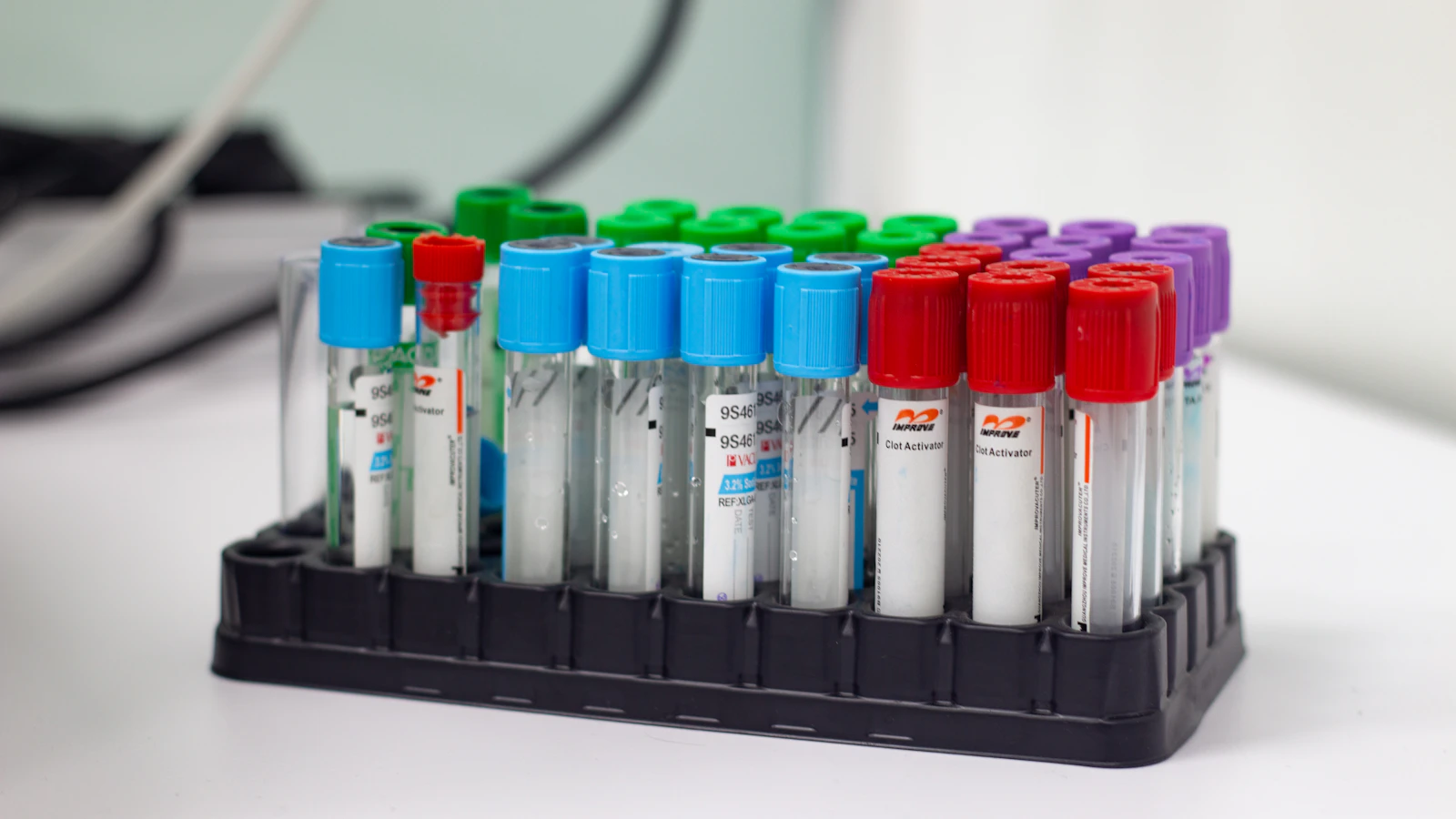
Ketamine often falls outside the picture in standard drug tests, and that is the first thing you should know. An ordinary 5-panel rapid test is usually not set up for it, so a negative result on such a test does not automatically mean ketamine is ruled out. Anyone who wants certainty here needs a test that measures the substance specifically.
That is our position straight away: with ketamine, choosing the right test matters more than the exact detection time, because the wrong test simply does not see the substance.
How long is ketamine detectable per matrix?
The times below are guide values for single and frequent use.
| Matrix | Single use | Frequent use |
|---|---|---|
| Urine | ± 1 to 3 days | up to ± 4 days |
| Blood | hours to ± 1 day | ± 1 to 2 days |
| Saliva | ± 1 to 2 days | ± 2 days |
| Hair | up to ± 90 days |
Why do standard tests miss ketamine?
A rapid test is built from individual reagents, each aimed at a particular substance group. A standard 5-panel usually contains reagents for cannabis, cocaine, amphetamine, opiates and benzodiazepines, among others, but not for ketamine. Ketamine falls outside those groups and so is not recognised, however recent the use. A lab that measures ketamine and the breakdown product norketamine specifically does see the substance. That is the core: with ketamine, choosing the right test matters more than the exact detection time, because the wrong test gives an apparently negative result.
What does the window depend on?
Dose, frequency and metabolism determine detectability, and kidney function and the acidity of the urine influence how quickly norketamine is excreted. But the most important factor remains whether the test targets ketamine at all. The Trimbos Institute notes in the National Drug Monitor that ketamine has appeared more often in nightlife in recent years, and the RIVM tracks the associated health incidents. The WHO points to the risks of regular use, including for the bladder. That is why a lab screens for it specifically instead of relying on a general rapid test.
Which test fits which question?
For recent use, saliva and blood sit closest to the moment itself. For use in the past few days urine is the standard, provided it targets ketamine. For a pattern over months a hair test is more suitable. In all cases: choose a test that measures the substance explicitly, otherwise a negative result says little.
What does a result mean?
With ketamine the pitfall is not the false-positive, but the false-negative: a standard test not set up for ketamine gives a negative result while the substance may simply be present. A negative 5-panel therefore does not rule out ketamine. A targeted lab analysis measures ketamine and norketamine and gives a value against a cut-off. A low value just above the threshold fits older or occasional use, a high value more recent use. Anyone who wants certainty about ketamine must therefore explicitly choose a test that measures the substance, and not rely on a general screening.
This matters most with concerns raised by an employer, an authority or the family, where a specific question has been asked. A general drug test that comes back "clean" can then be falsely reassuring, because ketamine fell outside the range of that test. It is therefore sensible to state in advance which substance you want ruled out, so the right analysis is requested. That way a negative result genuinely says something, instead of only that the standard groups were not found.
Targeted screening
If you want to test for this substance specifically, a ketamine screening can determine the value. If you want to rule out several substances at once, a broader panel makes more sense; the difference is explained in 5-panel versus 10-panel. The broader overview is in how long drugs stay detectable, and related stimulants in cocaine and amphetamine.
Frequently asked questions
How long is ketamine detectable?
Ketamine is usually detectable in urine for 1 to 3 days, in blood and saliva about a day, and in hair up to about 90 days. A lab measures ketamine and the breakdown product norketamine.
Is ketamine in a standard 5-panel?
Usually not. A standard 5-panel does not target ketamine, so a negative result does not rule out the substance. That requires a test that measures ketamine explicitly.
Why does the right test matter so much here?
Because the pitfall with ketamine is the false-negative: the wrong test simply does not see the substance. Anyone who wants certainty chooses a targeted ketamine analysis.
The windows above are guide values and vary per person. Every test result at Zuivertest includes a professional assessment from a BIG-registered doctor. For health questions, consult your GP.
الكاتب
Zuivertest
فحوصات ذات صلة
مقالات ذات صلة

7 misconceptions about drug tests (and what is actually true)

3-MMC: effects, duration and the comedown that follows