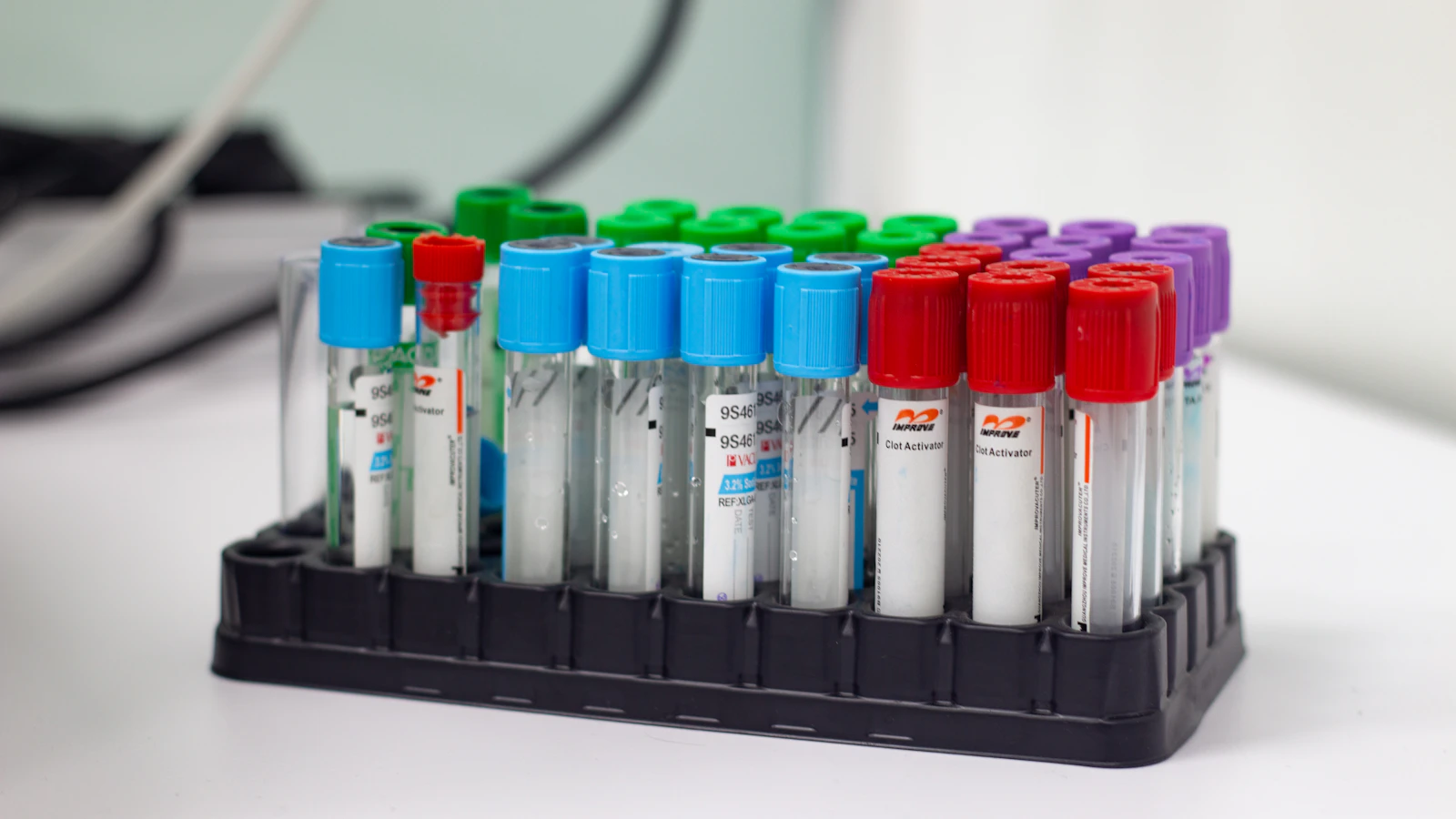
Methadone is usually detectable for 3 to 7 days in urine, about a day in blood and saliva, and up to about 90 days in hair. Because of its long half-life, methadone often stays visible longer than many other substances. A lab additionally measures the metabolite EDDP, which shows the substance was actually taken.
Methadone requires its own test. It does not fall under an ordinary opiate screening, so anyone wanting to check for it must have it measured separately. That is a common misconception: a negative opiate result does not rule out methadone.
How long does methadone stay detectable?
The guide values below apply to occasional to regular use. With maintenance treatment involving daily intake, methadone is continuously detectable for as long as the treatment lasts.
| Measurement | Blood / saliva | Urine | Hair |
|---|---|---|---|
| Methadone | ± 1 day | ± 3 to 7 days | up to ± 90 days |
| EDDP (metabolite) | ± 1 day | ± 3 to 7 days, sometimes longer | up to ± 90 days |
EDDP is the dedicated breakdown product of methadone. Measuring EDDP alongside methadone itself has a practical reason: it shows the substance was processed by the body and not just added to the sample shortly before the test. This is how a lab distinguishes genuine intake from manipulation.
Why the long half-life lengthens the window
Methadone has a long and highly variable half-life, which according to the Dutch Farmacotherapeutisch Kompas exceeds a full day in some people. As a result the substance accumulates with daily intake and stays detectable longer than, for example, heroin or cocaine. The cut-off value plays a role here too: the lower the cut-off, the longer methadone formally stays visible. You can read more about this in what is a cut-off value.
Maintenance treatment and context
Much methadone use takes place within medical maintenance treatment. A test then shows an expected, legitimate presence. As with all substances, a lab measures the substance, not the reason behind it. A reliable result comes about in two steps: a sensitive screening and then a confirmation that identifies and quantifies the substance. Why a lab test is more reliable than a test strip is explained in home drug test versus lab test.
Detectable is not the same as under the influence
A detection window says something different from "someone was under the influence at that moment". Because of the long half-life, methadone can still appear in urine days after the last intake, while the direct effect is long gone. A urine result therefore shows exposure within a window, not current impairment. Anyone wanting to get closer to "is someone under the influence now" chooses saliva or blood, which look back over a shorter period.
That distinction matters when interpreting a result. With maintenance treatment, a continuously positive methadone result is precisely the expected picture and not a sign of misuse. The combination of methadone and the metabolite EDDP helps to confirm this: the presence of EDDP shows the substance was actually processed and not added to the sample just before the test.
The choice of test material determines which question you answer. Saliva and blood align with recent use, urine with use in the past few days, and hair shows a pattern over months. For a reliable picture over a longer period a hair analysis is suitable, while urine remains the standard for most situations.
Which test fits your question?
If you want to test specifically for methadone and EDDP, you can simply select the substance in a custom panel. If you are unsure about urine, saliva or hair, which drug test suits you helps. The broad overview per substance is in the pillar how long do drugs stay detectable.
The RIVM keeps figures on opioids and treatment in the Netherlands; the WHO names methadone as part of treatment programmes for opioid dependence. These sources say nothing about your personal window, but place the use in context.
Frequently asked questions
Does methadone show up on an opiate test?
No. Methadone is synthetic and does not react to a standard opiate screening. It must be measured separately, together with the metabolite EDDP.
What does measuring EDDP add?
EDDP shows that methadone was processed by the body. This lets a lab distinguish genuine intake from a sample to which methadone was added afterwards.
Why does methadone stay detectable longer than heroin?
Because of its long half-life methadone is broken down slowly and accumulates with daily use. As a result the urine window is usually longer than for short-acting substances.
The windows in this overview are guide values and no guarantee; the outcome differs per person. Every test result at Zuivertest includes a professional assessment by a BIG-registered doctor. If you have concerns about your health or about substance use, discuss this with your general practitioner.
الكاتب
Zuivertest
مقالات ذات صلة
7 misconceptions about drug tests (and what is actually true)

3-MMC: effects, duration and the comedown that follows