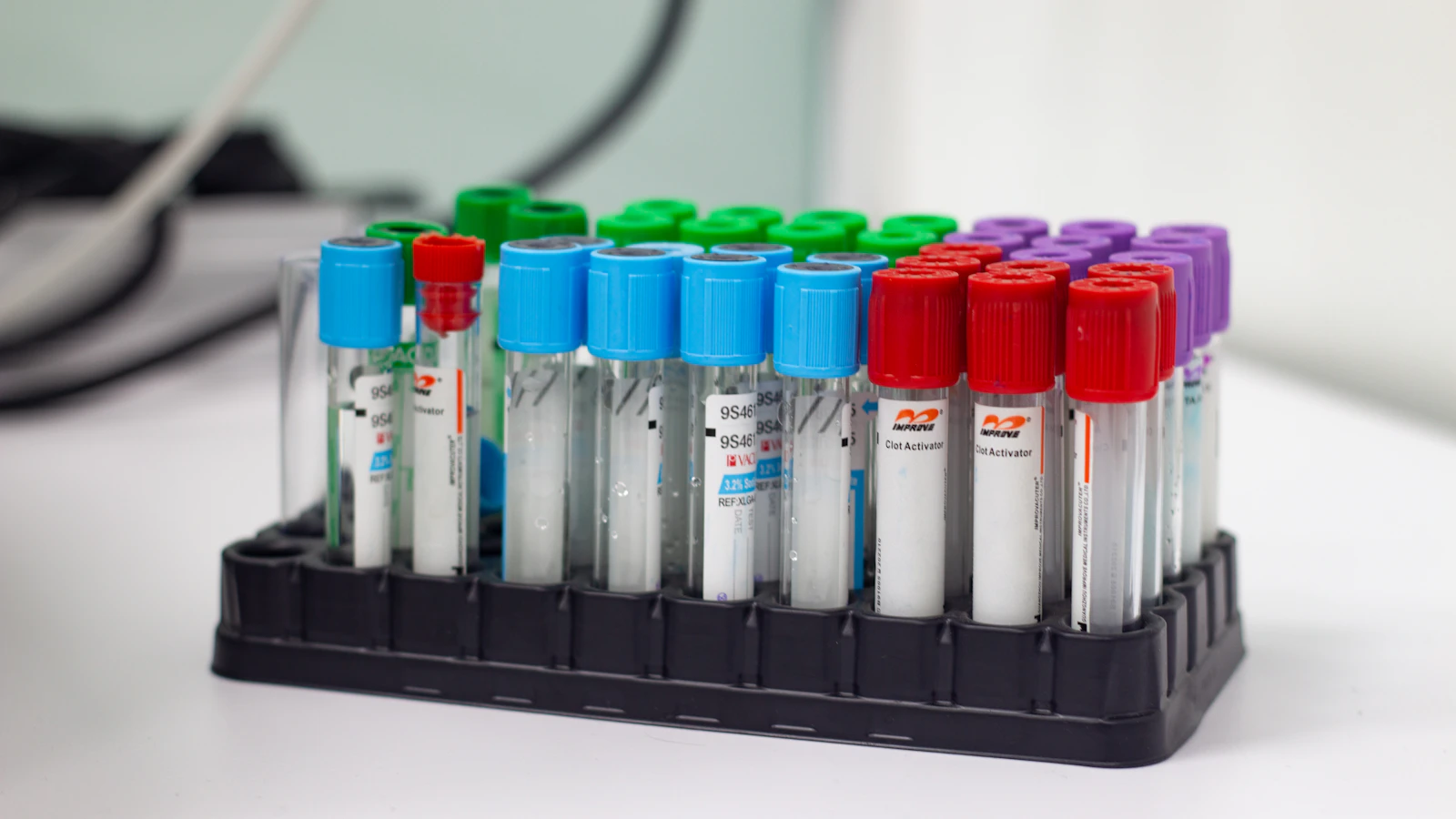
Saturday night is over, a drug test at work is scheduled for Monday, and the question is simple: will it still be detectable? For cocaine the answer is usually more reassuring than for cannabis, but there is a catch. A lab does not measure cocaine itself, but the breakdown product benzoylecgonine, and that stays detectable longer than the substance it comes from.
We would rather be honest: a certified lab test has the advantage here over a test strip. The lab gives a quantified value against a cut-off, not a faint line you have to interpret yourself.
How long is cocaine detectable per matrix?
The detection window depends strongly on the test material and on the frequency of use. The times below are guide values, not a guarantee.
| Matrix | Single use | Frequent use |
|---|---|---|
| Urine | ± 1 to 4 days | up to ± 1 week |
| Blood | hours to ± 1 day | ± 1 to 2 days |
| Saliva | ± 1 to 2 days | ± 2 days |
| Hair | up to ± 90 days |
What does the window depend on?
Frequency and dose, your metabolism, how much fluid you drink and the sensitivity of the test all play a part. That is why the outcome varies per person. With regular use, benzoylecgonine accumulates, so the urine window extends. Cocaine itself is broken down quickly in the body, often within a few hours, but the breakdown product stays detectable longer. That is why a lab measures benzoylecgonine rather than cocaine itself: it lengthens the window and makes the measurement more stable. Anyone who combines alcohol and cocaine additionally forms cocaethylene, a separate breakdown product a lab can recognise separately.
The Trimbos Institute calls cocaine, in the National Drug Monitor, one of the most used stimulants in the Netherlands after cannabis, and the RIVM tracks health incidents linked to use. The WHO points to the risks of regular use for the heart and blood vessels. Those figures explain why employers in safety-sensitive roles and the CBR include cocaine in their screening as standard.
In practice this means the timing of the test matters. Someone who uses on Friday night and takes a urine test on Monday morning often falls just outside or just inside the window after single use, depending on the dose and metabolism. With weekly or more frequent use that is less certain, because benzoylecgonine accumulates. A saliva or blood test would probably already be negative on Monday after single weekend use, while urine can still show a trace. That difference between matrices is exactly why the choice of test material cannot be seen separately from the question you want to answer.
Which test fits which question?
If you want to know whether someone used recently, for example over the weekend, a saliva or blood test sits closest to the moment of use. For use in the past few days urine is the standard, also because the generous window on benzoylecgonine makes the measurement reliable. If you want to map a pattern over months, a hair test is more suitable. A positive result shows exposure within the window, not current impairment at the moment of testing.
What does a result mean?
A lab reports a benzoylecgonine value against a cut-off. Cocaine has relatively few false-positives compared with amphetamine, which already makes a positive screening reasonably specific, but only a confirmation with a more precise method makes the result defensible. A low value just above the cut-off fits older or occasional use, a high value more recent or more frequent use. If cocaethylene is found alongside benzoylecgonine, that points to combined use with alcohol. A certified lab provides that distinction; a test strip with a line does not.
Targeted screening
If you want to test for this substance specifically, a cocaine screening can determine the value for you. If you want to rule out several substances at once, a panel makes more sense; the difference is explained in 5-panel versus 10-panel. The broader overview is in how long drugs stay detectable, and the related stimulants in amphetamine and MDMA.
Frequently asked questions
How long is cocaine detectable in urine?
After single use usually 1 to 4 days, with frequent use up to about a week. A lab measures the breakdown product benzoylecgonine, which is detectable longer than cocaine itself.
And in hair?
In hair, cocaine can stay visible for up to about 90 days, because the substance is locked into the hair shaft as the hair grows.
Does cocaine often give a false-positive result?
Cocaine has relatively few cross-reactions, so a positive screening is reasonably specific. Even so, only a lab confirmation makes the result defensible.
The windows above are guide values and vary per person. Every test result at Zuivertest includes a professional assessment from a BIG-registered doctor. For concerns about your health, consult your GP.
Autor
Zuivertest
Powiązane badania
Powiązane artykuły
7 misconceptions about drug tests (and what is actually true)

3-MMC: effects, duration and the comedown that follows