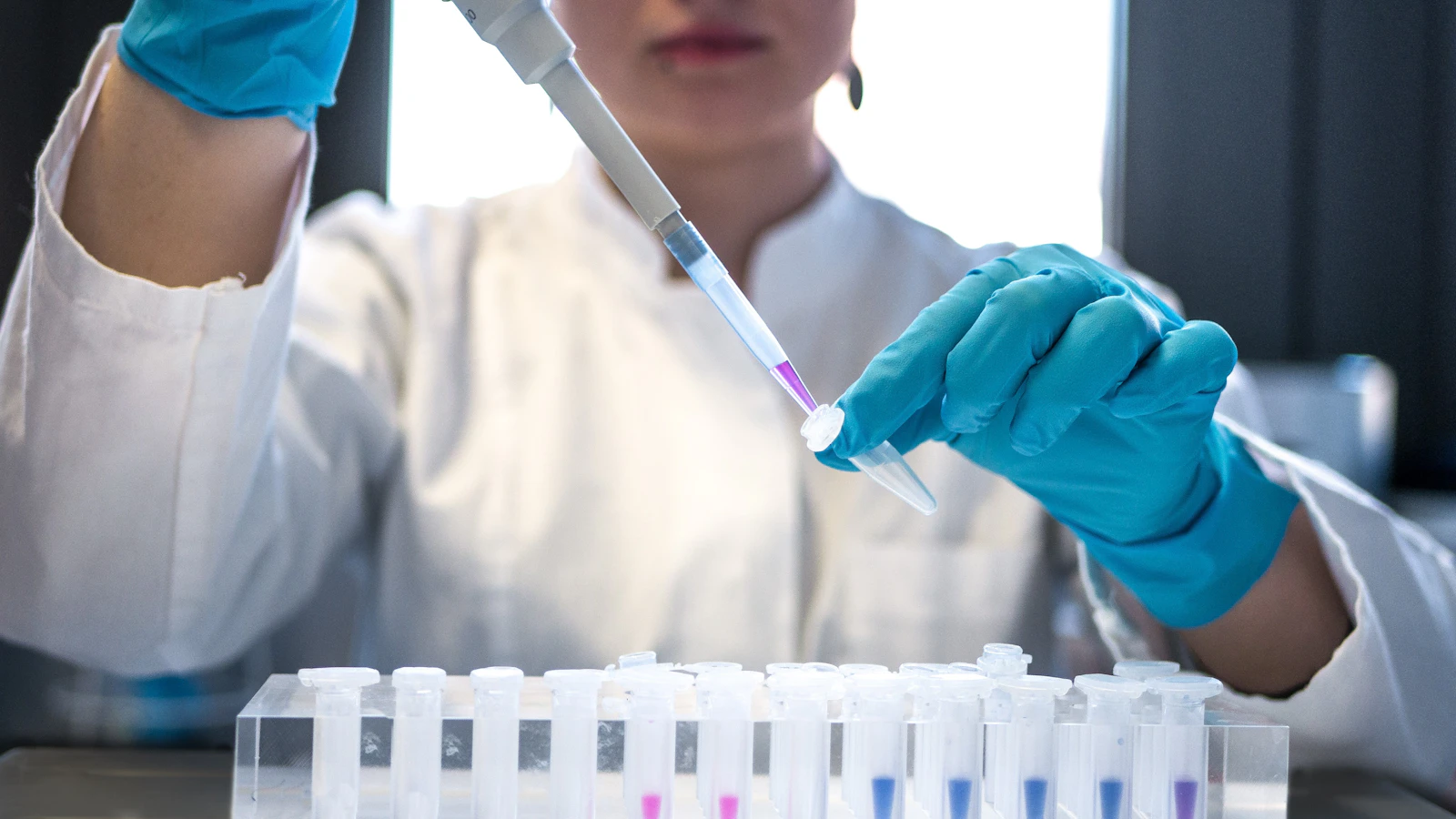
A home strip from the chemist costs a few euros and shows a line within five minutes. Useful, but stubborn misconceptions have grown up around those lines. Below are seven misconceptions about drug tests we hear most often, with what is actually true for each.
What strikes me is that nearly every one comes from the same distinction: the gap between a quick screen and a real laboratory measurement.
That single difference explains most of the confusion.
The table below sums up the seven points, with what the science and everyday lab practice actually say next to each one.
| Misconception | What is actually true |
|---|---|
| 1. A home strip is as reliable as a lab test | A strip is a screen; the lab confirms with GC-MS or LC-MS |
| 2. A positive result is always correct | Screens can cross-react with medicines and food |
| 3. Drinking lots of water flushes drugs from your urine | The lab measures creatinine and specific gravity and sees dilution |
| 4. Detox drinks clean you out fast | There is no evidence they remove metabolites faster |
| 5. Drugs are only detectable for a day or two | It depends on substance, frequency and matrix; cannabis can take weeks |
| 6. A saliva and a urine test detect for the same length of time | Each matrix has its own window: saliva short, urine longer, hair months |
| 7. Exercise and sweating speed up clearance | Metabolites leave the body through the liver and kidneys, not sweat |
Misconception 1: a home strip is as reliable as a lab test
A strip and a lab test do not do the same job. A test strip is a screen, an immunoassay that only gives a signal. A laboratory then confirms that signal with GC-MS or LC-MS, methods that pin down exactly which substance was present. A screen on its own returns a wrong result more often (PMID 28325505).
In practice that can go two ways. A strip can miss a substance that sits just under the cut-off, and it can flag something that is not there.
How reliable a home test really is, we cover in home drug test vs lab test.
Misconception 2: a positive result is always correct
A positive screen is a suspicion, not proof. Immunoassays can cross-react with common medicines and sometimes with food, which produces a false positive. That is why a positive screen counts as provisional until a second, specific method confirms it (PMID 24986836).
Take someone who runs a home strip after a cold and, to their alarm, sees a line for amphetamine, just above the common 1,000 ng/ml cut-off. They used nothing but a nasal spray. The GC-MS confirmation then comes back negative: the compound in that spray resembled the screen but was chemically something else.
Which medicines and foods can cause this, you will find in false-positive drug test.
Misconception 3: drinking lots of water or diluting your urine flushes it out
Dilution stands out. A laboratory checks whether a urine sample is valid by measuring creatinine, specific gravity and pH. If those fall outside the normal range, the sample counts as diluted or altered, and the result does not count as clean (PMID 40348438).
Drinking a lot of water at most lowers the concentration briefly. It does not remove the metabolites, and the dilution itself is measurable.
Why the lab sees this, you can read in diluting urine for a drug test.
Misconception 4: detox drinks clean you out fast
For detox drinks and cleanse kits there is no convincing evidence that they remove metabolites from your body faster. What they mostly do is dilute the urine briefly, and it is exactly that dilution that shows up on the validity check (PMID 40348438).
RIVM and Thuisarts.nl, the Dutch public health institute and GP information service, describe how the body breaks drugs down on its own, through the liver and kidneys, at its own pace. A drink does not change that pace.
What detox does and does not do, we set out separately in detox drinks and cleanse kits.
Misconception 5: drugs are only detectable for a day or two
That holds for some substances, but far from all. How long a substance stays detectable depends on the drug, on how often someone uses, and on the matrix being tested. Cannabis can stay visible in urine for weeks with frequent use, while cocaine is often gone within a few days (PMID 28325505).
What I see people underestimate most is how far cannabis departs from that. There is no single fixed number. The window shifts per person and per measurement.
The full overview per substance is in how long drugs stay detectable, and cannabis separately in how long cannabis stays detectable.
Misconception 6: a saliva and a urine test detect for the same length of time
Each matrix has its own detection window. A saliva test mainly catches recent use, often from a few hours to about a day. Urine looks further back, usually several days. Hair keeps a trace that can reach back months (PMID 28325505).
Which test suits which question, we compare in urine, saliva or hair test.
Misconception 7: exercise and sweating speed up clearance
Sweat is not the exit. Drugs and their breakdown products leave your body mainly through the liver and kidneys, not through the skin. Exercising just before a test can even backfire: in regular cannabis users, research found that exertion briefly raised blood THC, because THC is released from fat tissue (PMID 24018317).
Whether exercise, sweating and losing weight speed anything up, we looked into in exercise, sweating and weight loss.
What to do if you want certainty
If you want more than a line on a strip, choose a test with a fixed cut-off and a lab confirmation. At Zuivertest you arrange that without going through a doctor first, for example with a Core 5-Panel or the broader Extended 10-Panel. The result is assessed by a BIG-registered doctor.
If you are unsure about a result you already have, the first question is always the same: was this a screen or a confirmation?
Every test result at Zuivertest includes a professional assessment by a BIG-registered doctor. For treatment decisions, discuss your results with your GP.
Sources
- Moeller KE, Kissack JC, Atayee RS, Lee KC, "Clinical Interpretation of Urine Drug Tests: What Clinicians Need to Know About Urine Drug Screens", Mayo Clinic Proceedings, 2017 (PMID 28325505)
- Saitman A, Park HD, Fitzgerald RL, "False-positive interferences of common urine drug screen immunoassays: a review", Journal of Analytical Toxicology, 2014 (PMID 24986836)
- Fyffe-Freil RC, Omosule CL, "Specimen Validity Testing in the Toxicology Laboratory", Clinics in Laboratory Medicine, 2025 (PMID 40348438)
- Wong A, Montebello ME, Norberg MM, et al., "Exercise increases plasma THC concentrations in regular cannabis users", Drug and Alcohol Dependence, 2013 (PMID 24018317)
- RIVM, monitoring of drug use in the Netherlands (rivm.nl)
- Thuisarts.nl, information on drug and alcohol use (thuisarts.nl)
Autor
Zuivertest
Dr. Naimi, lekarz wpisany do holenderskiego rejestru BIG, nadzoruje standardy medyczne naszych treści i ocen. Przeczytaj naszą politykę medyczną
Powiązane badania
Powiązane artykuły

Cocaine addiction: the crash, the craving and what a test shows
Ketamine addiction: the signs and what a lab sees