Flushing after half a glass of wine is rarely caused by an allergy. Usually it is alcohol intolerance: your body breaks down acetaldehyde, the first breakdown product of alcohol, too slowly. That substance causes the flush, the pounding heartbeat and the headache.
We sell blood tests, and the honest answer here is still that none of our tests detects alcohol intolerance. That is not modesty, it is how this condition works.
Below you can read where the reaction comes from, how to tell intolerance from an allergy, and which test does and does not say anything here.
What is alcohol intolerance exactly?
Alcohol intolerance means your body processes alcohol less well than average. Symptoms come on quickly, often within minutes, and already at small amounts. A red face, a warm neck, nausea and palpitations are the complaints reported most often.
It is not a reaction of your immune system. That is where it differs from an allergy.
The predisposition is usually inherited and does not change over the years. The reaction can feel stronger when you are tired, on an empty stomach, or in combination with certain medicines.
Why do you flush from alcohol?
Your body breaks alcohol down in two steps. First ethanol is converted into acetaldehyde, then acetaldehyde is converted into acetic acid. If that second step runs slowly, acetaldehyde builds up, and that widens the blood vessels in the face and neck.
That second step is handled by the enzyme ALDH2.
In some people that enzyme works less well because of a variant in the ALDH2 gene. Research by Kim and colleagues from 2005 found a clear association between that gene variant and flushing after alcohol. The variant is most common in people of East Asian descent, though not exclusively.
Picture this: two colleagues drink the same 100 ml glass of wine, good for about 10 grams of alcohol. One notices nothing, the other is red up to the neck within ten minutes. The difference is not in the glass, but in how fast their ALDH2 clears the acetaldehyde.
Beer and wine also contain histamine and sulphite. Those substances can cause separate complaints in some people, such as a blocked nose or itching, independent of the ALDH2 route.
Is it an allergy or an intolerance?
The difference lies in the mechanism. In an intolerance the breakdown falls short, in an allergy your immune system reacts to a protein. A true alcohol allergy is rare; more often someone reacts to an ingredient in the drink, such as wheat in beer.
| Reaction | What happens | Typical symptoms | How it is established |
|---|---|---|---|
| Alcohol intolerance | acetaldehyde is broken down slowly | flushing, warmth, palpitations, headache | from the symptom pattern, by a doctor |
| Histamine reaction | histamine in wine and beer | blocked nose, itching, headache | from the symptom pattern, by a doctor |
| Allergy to an ingredient | immune reaction to a protein | hives, swelling, shortness of breath | allergy testing by a doctor |
| Hangover | fluid and salt loss, poor sleep | headache and nausea, hours later | from the time course, not from a test |
The timing helps you tell them apart. Intolerance causes symptoms within minutes, a hangover starts hours later.
If you get shortness of breath, swelling of the face or hives after alcohol, take that seriously and discuss it with your GP. That pattern fits an allergy more than an intolerance.
Which test detects alcohol intolerance?
No single blood test establishes alcohol intolerance. The diagnosis rests on your symptom pattern, assessed by a doctor, possibly supported by allergy testing if an allergy seems likely. Genetic testing for ALDH2 exists, but is rarely used in the Netherlands.
This is exactly where we want to add a caveat.
Search results for this topic feature many providers of so-called food intolerance tests based on IgG. Those tests are not considered reliable for establishing intolerances, and for alcohol intolerance they are not validated. That is why we do not offer them.
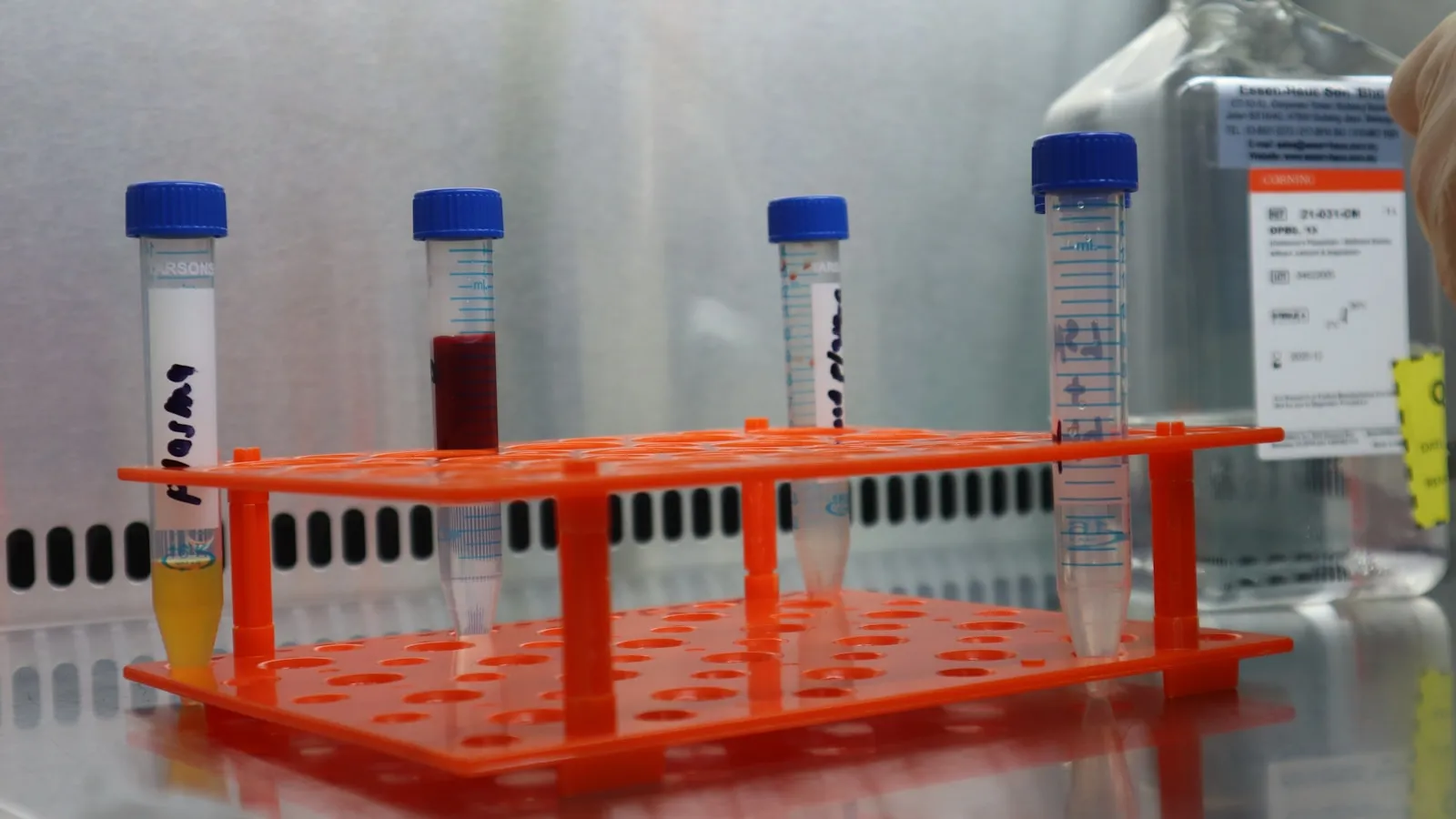
What a blood test can do is show something else: how your liver is doing and what your use has been across weeks. You can read more about that in gamma-GT too high and in our overview of proving alcohol use.
What does alcohol intolerance mean for your health?
Acetaldehyde is not only the cause of the flush. Researchers also link the substance to tissue damage on repeated exposure. For people whose breakdown runs slowly, that exposure per glass may be higher.
That makes the flush a signal, not a nuisance to push through.
The advice from the Dutch Health Council applies here in full: any amount of alcohol can be harmful, and drinking no alcohol is healthier and safer. Thuisarts.nl also describes what you can do if you want to drink less.
What I tell people: do not go looking for a test that explains your flush, because it does not exist. Discuss the pattern with your GP, and do not let a seller of an intolerance test talk you into anything.
Every blood test result at Zuivertest includes a professional assessment from a BIG-registered doctor. For treatment decisions, discuss your results with your GP.
Sources
- Kim JS et al., "Association of ALDH2 polymorphism with sensitivity to acetaldehyde-induced micronuclei and facial flushing after alcohol intake", Toxicology, 2005. PMID 15840430.
- Gezondheidsraad, advice on alcohol: any amount of alcohol can be harmful (accessed July 2026).
- Thuisarts.nl, "Ik wil minder alcohol drinken of stoppen met drinken" (accessed July 2026).
Autor
Zuivertest
Dr. Naimi, lekarz wpisany do holenderskiego rejestru BIG, nadzoruje standardy medyczne naszych treści i ocen. Przeczytaj naszą politykę medyczną