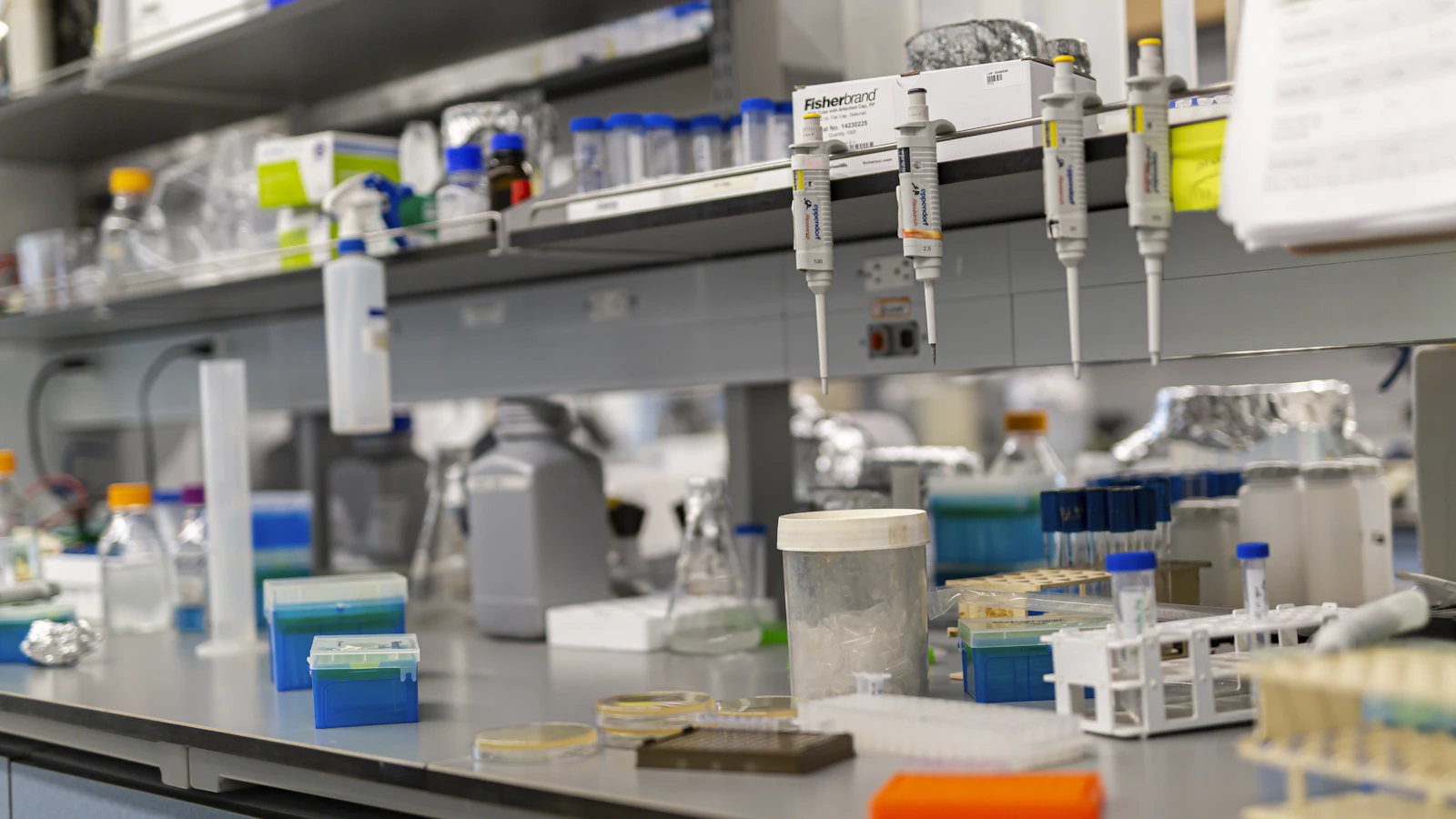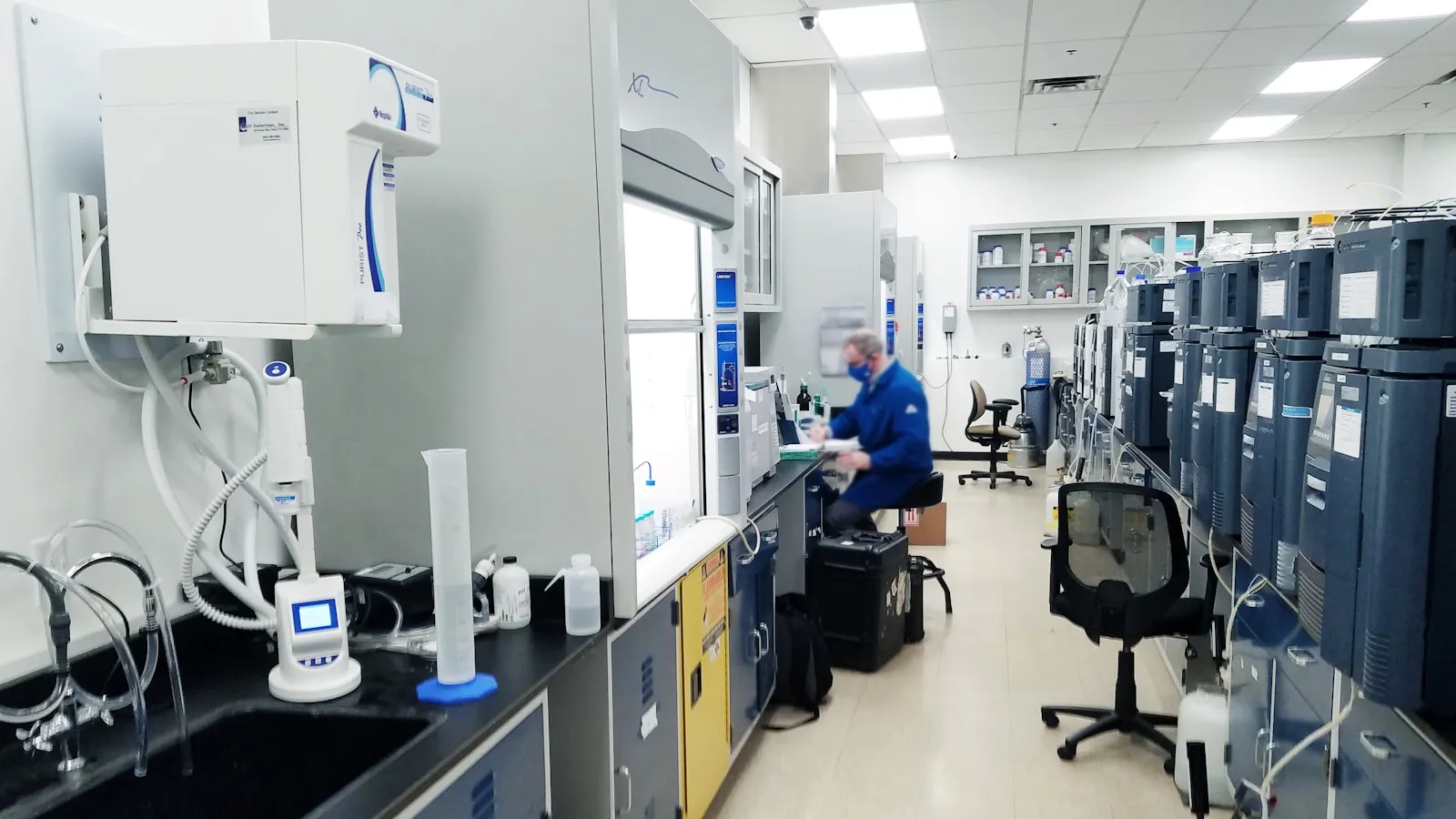
A drug test usually runs in two steps. First a screening, often an immunoassay. It's fast and sensitive, but it can sometimes give a false positive. Then comes confirmation with GC-MS or LC-MS. Only after that check does a serious lab treat a positive result as reliable.
Many people assume one test is enough. In practice, a good lab rarely works that way. The reason sits in the gap between sensitivity and specificity.
A reliable result rests on two qualities. Sensitivity finds possible substances. Specificity confirms which substance it is. Together they make a result stronger.
This article explains that difference calmly.
What is a screening test?
A screening test is the first step. The lab often uses an immunoassay, a method with antibodies that recognise possible substances. It's fast, sensitive and relatively cheap. The goal is broad: filter many samples in a short time. A positive screening is a signal, not a final verdict.
An immunoassay works with a threshold value. Above that value the lab calls the result positive, below it usually negative. That threshold makes the test practical, but not absolute.
The lab chooses the threshold carefully. A threshold set too low gives more false positives. One set too high can miss a real result. So the balance is a trade-off.
Sensitivity has a downside. An immunoassay can react to substances that resemble each other. That's how a false positive sometimes arises.
Home tests with strips often use the same immunoassay technique. Want to know how reliable those strips are? Read home drug test vs lab test for the differences.
What is a confirmation test (GC-MS)?
A confirmation test is the second step. GC-MS stands for gas chromatography-mass spectrometry, and LC-MS for the liquid variant. These methods separate substances and measure their unique molecular fingerprint. That makes them highly specific. Specialists often see GC-MS as the gold standard.
Specificity is the strong side here. The test recognises a substance by the mass of its molecules. Confusion with another substance therefore becomes possibly smaller.
Mass spectrometry measures particle mass very precisely. Each substance has its own mass pattern. That pattern is hard to confuse with another substance. So the method counts as highly reliable for identification.
The device makes a kind of barcode of each substance. The lab compares those patterns with known references. A match points to a specific substance.
This precision does cost more time and money. So a lab uses confirmation in a targeted way, usually only after a positive screening.
Why does a lab confirm a positive screening?
A serious lab confirms every positive screening. An immunoassay can react to related substances, such as some medicines or foods. Without confirmation, an innocent cause could give a positive result. So GC-MS or LC-MS checks the first result. Only then does the lab report with more certainty.
A good workflow separates screening and confirmation on purpose. The first step searches broadly. The second step looks sharply. Together they give a result with more ground.
Some medicines and foods can affect a screening. You can read which ones might in false-positive drug test.
Say a screening gives a positive signal. A confirmation can support or refute that signal. Both outcomes give you possibly more clarity.
This approach lines up with insights from reliable sources. The RIVM and the Farmacotherapeutisch Kompas point to the risk of cross-reactions with immunoassays. A confirmation with mass spectrometry can reduce that risk.
That's how a lab avoids treating a first signal too quickly as certainty.
| Feature | Screening (immunoassay) | Confirmation (GC-MS/LC-MS) |
|---|---|---|
| Goal | Broadly filter many samples | Check a positive screening in a targeted way |
| Method | Antibodies recognise possible substances | Separate substances and measure molecular mass |
| Reliability | Sensitive, but can give a false positive | Highly specific, often the gold standard |
| Cost and time | Fast and relatively cheap | Slower and costlier per sample |
What does this mean for your result?
For you, this means more trust in the result. A result that rests only on a screening is less certain. So ask whether the lab confirms positive results. At Zuivertest, confirmation is part of the workflow. That way you know a reported result may have passed a second check.
Ask, with every test, how the result comes about. A lab that confirms may give you more peace of mind. You'll then read a result that has had an extra check.
Want to know exactly how the lab reads a result? See understanding drug test results for the steps behind positive and negative.
A reliable result starts with a good test choice. With the extended 10-panel you can have several substances examined at once. Each positive signal can be checked through confirmation.
That way you get a result you can trust more calmly.
Sources
- RIVM, information on drugs and testing methods.
- Farmacotherapeutisch Kompas, information on cross-reactions and medicines.
- Thuisarts.nl, general explanation of test results.
Every test result at Zuivertest includes a professional assessment from a BIG-registered doctor. For treatment decisions, discuss your results with your GP.
الكاتب
Zuivertest
Dr. Naimi، طبيب مسجل في سجل BIG الهولندي، يشرف على المعايير الطبية لمحتوانا وتقييماتنا. اقرأ سياستنا الطبية