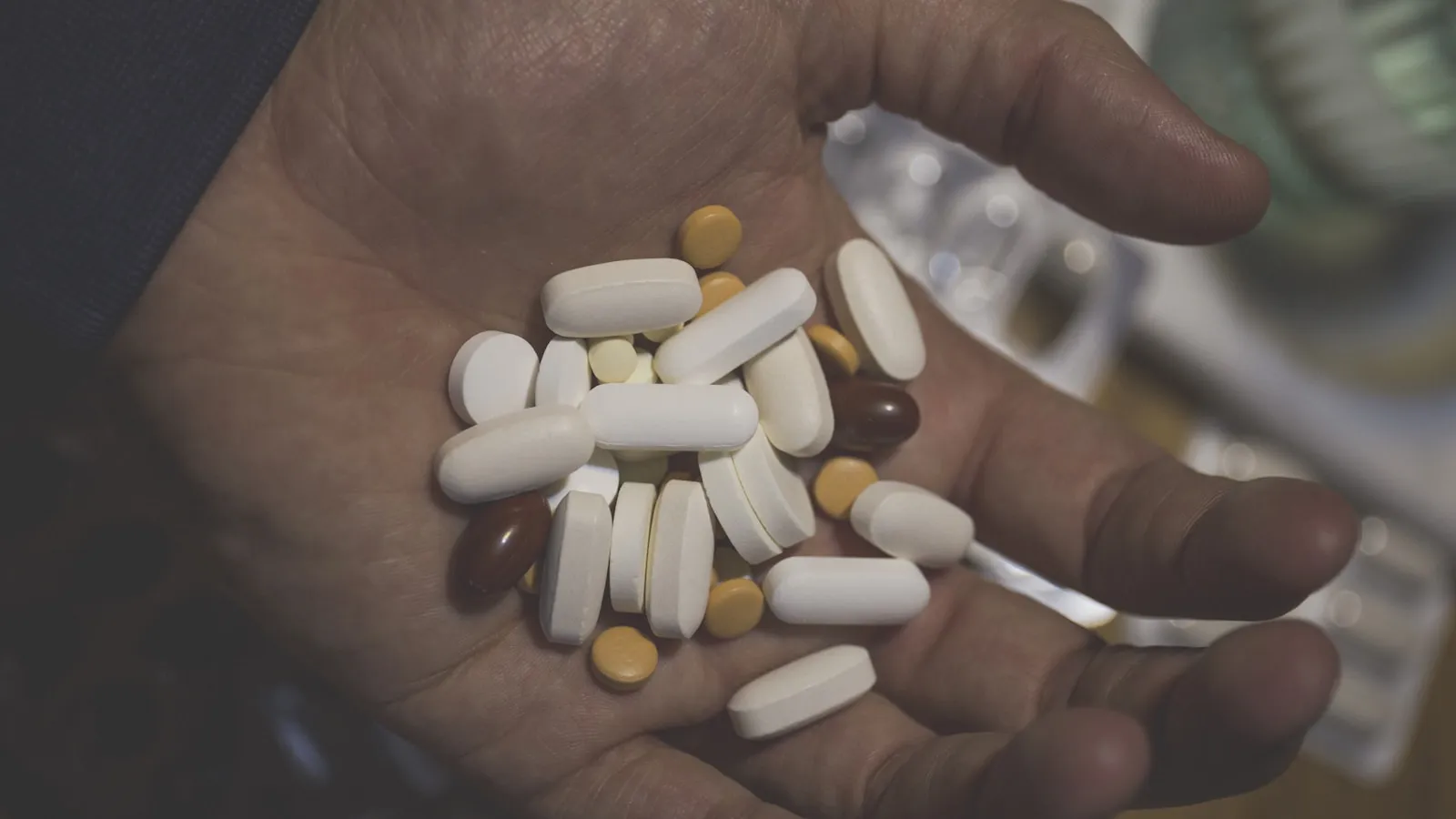
You do not use drugs, but your test strip turns positive for opiates. Before you panic: that poppy seed on your roll this morning may be the cause. False positive results are rare with a good lab test, but with rapid screenings and home strips they occur more often than people think. The reason is almost always cross-reaction: an innocent medicine or food resembles a drug chemically enough to mislead the antibodies.
Our stance is clear: a positive screening is a question, not a conclusion. Whoever takes a result seriously has it confirmed before any consequences are attached. That is not caution for caution's sake, but the only way to prevent an unjust accusation.
How a false positive result arises
Rapid tests work with antibodies that react to a whole substance group, not to one precise molecule. A substance with a similar structure can activate that same antibody. That is called cross-reaction. A laboratory counters this by confirming every positive screening with GC-MS or LC-MS, methods that identify the substance exactly rather than measuring a group reaction. The Trimbos Institute and the RIVM therefore stress that a single screening result may never count as proof.
| Substance that tests positive | Possible cross-reacting cause |
|---|---|
| Opiates | Poppy seed, some cough syrups with codeine |
| Amphetamines | Nasal sprays with pseudoephedrine, some slimming and asthma medicines, bupropion |
| Methadone / opiates | Certain antihistamines and antidepressants |
| Cannabis (THC) | Some anti-inflammatories (NSAIDs), in rare cases pantoprazole |
| Benzodiazepines | Some prescription sleep and sedative medicines, sertraline |
| Amphetamines | Vitamin or herbal supplements with ephedra-like substances |
The table shows possibilities, not certainties. Whether a cross-reaction occurs depends on the dose, the brand of the test and the sensitivity of the antibody. A substance that reacts on one test need not do anything on another. Important: the table is not a reason to stop medication. Never stop a prescribed medicine on your own; discuss an unexpected result with your doctor first.
Food as a cause: fact and fable
Not every story about food is true. Poppy seed is the best-known and best-substantiated example: it naturally contains small amounts of opiate-like substances and can briefly make an opiate screening positive. Other claims, such as that tonic with quinine or certain teas routinely give a positive result, are far weaker substantiated. The Trimbos Institute and the Netherlands Nutrition Centre (Voedingscentrum) stress that the amount is decisive: a single roll with poppy seed gives a different picture than a large portion. So treat food stories with the same level-headedness as medication: possible, not guaranteed.
How long does a cross-reaction last?
A common follow-up question is how long such an innocent cause can influence a screening. That depends on how quickly the body breaks down and excretes the substance in question. With poppy seed it is usually a short period of a few hours to about a day, depending on the amount. With a prescribed medicine you take daily, by contrast, the cross-reaction can recur as long as you take the medicine. That is precisely why it is valuable to note in advance, before a planned test, which medicines, over-the-counter products and supplements you use. That information helps a laboratory and a doctor to interpret an unexpected result, and prevents an innocent cause from being wrongly read as use. The Netherlands Nutrition Centre points out that supplements with plant extracts sometimes contain unexpected substances too.
What to do with an unexpectedly positive result
- Do not panic with a home strip. A line is an indication, not a determination. How large that difference is, read in home drug test vs lab test.
- Note what you use. Keep track of prescriptions, over-the-counter products and supplements. That information helps a doctor or laboratory interpret the result.
- Ask for confirmation. Have a positive screening confirmed with a lab method before any consequences follow.
Why a lab test makes the difference
A confirmation analysis does not measure whether "something from the group" is present, but which exact substance, and in what concentration relative to the cut-off. What that threshold means is in what is a cut-off value. As a result nearly every cross-reaction disappears as an explanation: GC-MS and LC-MS recognise the exact molecule, while an antibody only reacts to a family.
That difference is exactly why a result with consequences, for example in a job application or a workplace matter, may not rest on a single line. A confirmed measurement is available via the core 5-panel or the extended 10-panel. How long substances stay detectable is in how long do drugs stay detectable, and the difference between strip and lab in home drug test vs lab test.
Every test result at Zuivertest includes a professional assessment from a BIG-registered doctor. A drug test can give clarity, but does not replace medical advice. For treatment decisions, discuss your results with your GP.
Sources
- Trimbos Institute, National Drug Monitor, substance use in the Netherlands (trimbos.nl)
- RIVM, information on drugs and detection (rivm.nl)
- Netherlands Nutrition Centre (Voedingscentrum), information on nutrition and health (voedingscentrum.nl)
Author
Zuivertest
Dr. Naimi, BIG-registered physician, oversees the medical standards behind our content and assessments. Read our medical policy
Related Tests
Related Posts

Cocaine addiction: the crash, the craving and what a test shows
Ketamine addiction: the signs and what a lab sees