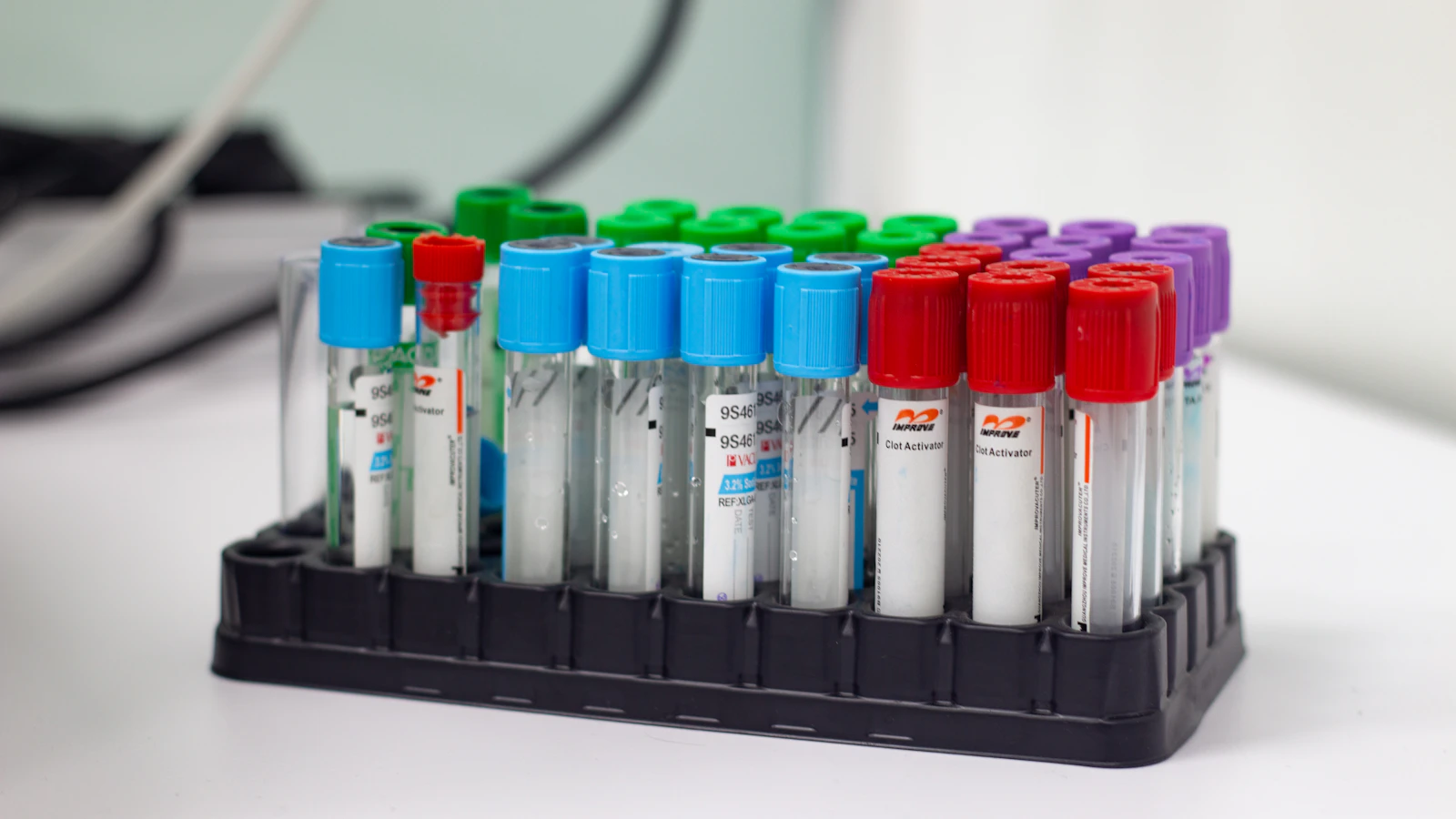
Drinking lots of water doesn't affect a drug test the way people hope. Water can briefly dilute urine, which lowers the concentration for a short time. It doesn't remove substances from your body. The lab checks creatinine and specific gravity and often spots an over-diluted sample right away.
The idea sounds logical: more fluid, cleaner urine. In practice your body works differently. Substances break down at a fixed pace, no matter how much you drink.
Want to know how substances leave the body? Read our explainer on drugs in your system and what detox does and doesn't do.
Does drinking water beat a positive test?
No, not the way it's often assumed. Lots of water lowers the concentration of substances in urine for a short while. The substances themselves stay in your body and leave through normal breakdown. Once the dilution fades, the concentration rises again. A test then measures what's really there.
The substances stay in your tissue and blood. Water doesn't touch that store. You mainly change how concentrated your urine is at that moment.
Dilution isn't a cleanup, only a temporary change.
A lower concentration can fall below a threshold. That threshold is called the cut-off. Read more about what a cut-off value on a drug test is.
| Claim | What really happens |
|---|---|
| Lots of water flushes drugs out | Water briefly dilutes urine; substances stay in the body |
| Dilution goes unnoticed | The lab measures creatinine and specific gravity as a check |
| More water always works better | An over-thin sample may be rejected or requested again |
| Water speeds up breakdown | Liver and kidneys set the pace, not the volume |
What does water really do in your body?
Water manages your fluid balance and helps the kidneys clear waste. It doesn't act as a flush that pulls drugs or alcohol from your tissue. Substances break down through the liver and kidneys at their own pace. Extra water barely speeds that up and mainly makes urine lighter in color.
Your kidneys filter waste from the blood and produce urine. Drink more, and that urine gets lighter and thinner. The total amount of breakdown product barely changes.
Water is good for your overall health and fluid balance. As a quick fix for a test it falls short. It changes the reading briefly at most, not the content.
Some products promise a faster cleanse. Whether that's true, you can read in our piece on whether detox drinks and kits really work.
How does the lab see diluted urine?
A lab measures not only the substance, but also whether the sample is valid. Two values matter here: creatinine and specific gravity. If they're too low, the urine often counts as diluted. Some labs record that as invalid or may ask for a new sample.
Creatinine is a waste product the kidneys excrete steadily. In heavily diluted urine that value is low. Specific gravity also shows how thick or thin the sample is.
So the lab first judges whether the sample is usable. Only then does it look at the substances. An over-thin sample gives no reassurance.
If both values are too low, the lab can mark the sample as diluted. Reliable measurements depend on a valid sample. There's more in our article on why the lab sees that urine is diluted.
Is drinking lots of water safe?
Drinking large amounts of water in a short time can be unsafe. Your blood can then hold too little sodium, which is called hyponatremia. This can cause symptoms like headache, nausea and confusion. In rare cases more serious problems develop. A normal amount of water across the day is fine for most people.
A healthy person usually clears excess fluid well. Still, the body has limits on how much it handles quickly. So drink in moderation and listen to your body.
Heavy dilution doesn't solve the underlying picture. It can mainly raise new questions for the reviewer. Honest measurement stays the calmest route.
If you're unsure about symptoms, you'll find reliable guidance on Thuisarts.nl. For questions about medicines and metabolism, the Farmacotherapeutisch Kompas offers background.
What does give an honest picture?
A lab test gives a measured picture of your own status at that moment. Instead of hoping water hides something, you see what's really in your body. So you can respond to facts instead of assumptions. A doctor reviews the result for you.
A measured result removes doubt and gives something to hold on to.
Want several substances measured at once? Take a look at our extended 10-panel test with a professional assessment.
At Zuivertest a factual picture comes first, not getting around a test. You test your own status, calmly and without judgment.
One glass more or less water won't change that measured picture.
Sources
- RIVM, information on alcohol, drugs and urine testing.
- Thuisarts.nl, information on fluid intake and health.
- Farmacotherapeutisch Kompas, background on breakdown and excretion.
Every test result at Zuivertest includes a professional assessment from a BIG-registered doctor. For treatment decisions, discuss your results with your GP.
Author
Zuivertest
Related Tests
Related Posts
7 misconceptions about drug tests (and what is actually true)
3-MMC: effects, duration and the comedown that follows