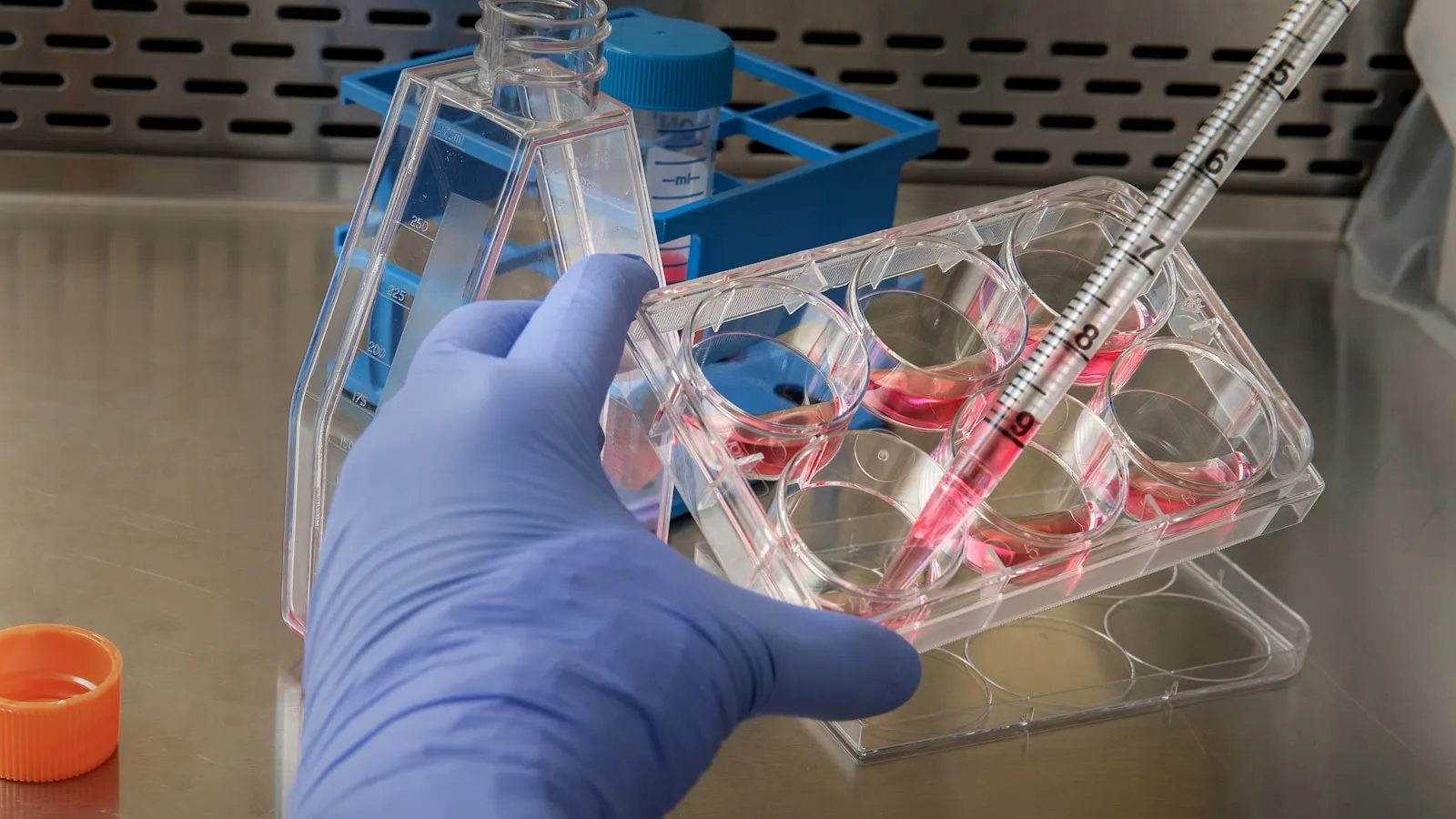
A positive drug test doesn't immediately mean a substance has been confirmed. The first result is almost always a screening. A positive result counts as reliable only after a lab confirms it with GC-MS or LC-MS. At Zuivertest, we think that difference matters, because it shapes how you should read your own result.
A drug test gives you information about your own status. Nothing more and nothing less. It's a measurement at one moment, not a verdict.
In this guide we calmly explain what a negative and a positive result mean. You'll learn what screening and confirmation are. You'll see what ng/ml and the cut-off value mean. And you'll read what an invalid or diluted sample may indicate.
What does a negative or positive result mean?
A negative result means the test found no substance above the cut-off value. A positive result means something may sit above that line. A positive screening still needs further checking. Only a lab using GC-MS or LC-MS can actually confirm a substance. So the first result is a signal, not a final verdict.
A negative result is reassuring for many people. Still, it helps to know what it really says. The test measures whether a substance rises above a fixed threshold.
If a substance sits below that line, you'll see a negative result. In theory the substance could still be present in a small amount. So negative doesn't always mean zero.
A positive screening result works the other way around. It points to a possible presence above the line. That's a reason to look further, not to panic.
Some substances or medicines may affect a screening. That's why a first positive result isn't yet a settled fact.
Want to know which medicines and foods can disturb a result? Read our article on a false-positive drug test and its possible causes.
What is screening and what is confirmation?
Screening is the first, fast step that flags a possible presence. Confirmation is the second, precise step in a lab. Screening often uses a test strip or immunoassay. Confirmation uses GC-MS or LC-MS. Only that second step can identify a substance with high certainty and measure the amount.
You can think of screening as a first sieve. It's quick and handy for a first impression. But it's sensitive to interference.
A screening can sometimes react to a look-alike substance. That's called a cross-reaction. It can produce a result that isn't truly positive.
Confirmation largely solves that problem. GC-MS stands for gas chromatography-mass spectrometry. LC-MS stands for liquid chromatography-mass spectrometry.
Both methods separate a sample and recognise substances by their unique pattern. That lets a lab confirm a substance reliably. It's seen as the standard for a definitive result.
We'd advise reading every positive screening in this light. The screening opens the question, the confirmation answers it.
You'll find more in our spoke on screening versus confirmation and why GC-MS is the standard. Curious how a home test compares with a lab test? See home drug test versus lab test and how reliable strips are.
What do ng/ml and the cut-off value mean?
The label ng/ml means nanograms per millilitre. It's a measure of how much of a substance sits in a sample. The cut-off value is the agreed line in ng/ml. Above that line a test calls a result positive. Below it the result is negative. So the cut-off decides where the line falls.
A nanogram is a very small weight. It's a billionth of a gram. Drug tests measure in these tiny units because substances often appear in low amounts.
Say a cut-off sits at 50 ng/ml. A value of 60 ng/ml gives a positive screening. A value of 40 ng/ml gives a negative result.
The cut-off isn't a law of nature. It's an agreement that can differ per test and per substance. So the same amount can be positive in one test and not in another.
That's why results can be hard to compare. The numbers only gain meaning with their matching cut-off attached.
The cut-off also helps stop tiny traces from being overread. A value just above zero won't instantly trigger a positive signal.
You'll find a deeper read of the numbers in our spoke on what ng/ml on a drug test result means. We cover the threshold itself in what a cut-off value on a drug test is.
What if your sample is invalid or diluted?
An invalid or diluted sample means a test can't give a reliable result. A lab therefore checks whether a urine sample is genuine and undiluted. It looks at things like creatinine and specific gravity. If those are off, the sample may be too watery or simply unusable.
Creatinine is a natural substance in urine. In heavily diluted urine its level sits low. That can point to drinking a lot or to added water.
Specific gravity says something about the density of the urine. Here too, a low value points to dilution. Together these checks form a validity test.
A diluted sample isn't the same as a negative sample. It means the test may not be properly assessable. A fresh collection can then be needed.
An invalid sample can have other causes too. Think of an unusual acidity or contamination of the sample.
We'd rather see an invalid result as a question than a suspicion. Often a calm, clean new collection is enough to get clarity.
From result to meaning to action
The table below sums up the four common outcomes. For each result you'll see what it may mean and what you can do. Use it as an overview, not as personal advice. For your own situation, your GP stays the right point of contact.
| Result | What it may mean | What you can do |
|---|---|---|
| Negative | No substance found above the cut-off value. | Keep the result. Discuss any doubts with your GP. |
| Positive (screening) | Possibly a substance above the line, not yet confirmed. | Wait for lab confirmation with GC-MS or LC-MS before drawing conclusions. |
| Confirmed positive | A substance has been confirmed in the lab. | Discuss the result and possible causes calmly with your GP. |
| Invalid or diluted | Sample too watery or not properly assessable. | Consider a fresh, clean collection. Ask for an explanation if needed. |
Always read a result in context. The substance, the measured value, the cut-off and the type of test belong together. Only together do they tell the story. A single number or one line says little on its own.
A positive result, what now?
A positive result is a reason to take the next step calmly. With a positive screening, you first wait for confirmation. With a confirmed positive result, you discuss it with your GP. Try not to jump to conclusions, because cause and context matter. A result rarely stands entirely on its own.
It helps to first check which kind of result you have. A screening and a confirmation call for a different response. That difference sets the next step.
If you have a screening result, the confirmation matters most. Only then can you give the result real meaning.
If you have a confirmed positive result, a talk with your GP is a good step. Your GP can think along about possible causes. Medication use can come up there too.
We've laid out the full steps in our spoke on a positive drug test and what to do next.
Can you have a result re-tested?
In some cases you can ask for a re-test. That means a lab reassesses the original sample. A re-test can make sense if you doubt a result. Whether it's possible depends on the test type and the stored sample.
A re-test isn't the same as a new test. A re-test uses the same, earlier collected sample. So the original measurement stays the starting point.
What is and isn't possible here is covered in our spoke on having a drug test result re-tested and how that works.
How do you read your own result at Zuivertest?
At Zuivertest, a test is meant to help you understand your own status. You run the test in your own space. Only you see the result, unless you choose to share it. That gives calm and room to look at what's there in full privacy. Every result also gets a professional assessment.
A self-test you control has a clear advantage. You decide the moment and the setting. There's no outside pressure and no onlooker.
That makes it easier to look at the numbers calmly. You can quietly line up the cut-off and the ng/ml unit. That makes a result more understandable.
We believe understanding matters more than a quick verdict. A result you grasp is one you can weigh better.
Want to look at several substances at once? See our extended test that can detect multiple substances. Which substances a test covers is always listed clearly with the test description.
Unsure after a result whether something disturbed it? Then our article on a false-positive result from medicines and food can help you weigh the context.
Frequently asked questions about your drug test result
Below we answer a few questions that reach us often. The answers are general in nature. For your personal situation, your GP stays the right point of contact.
Is a positive screening the same as a confirmed result?
No. A positive screening points to a possible presence. Only a lab using GC-MS or LC-MS can confirm it. Until that confirmation, the result stays provisional.
Does a negative result mean nothing is present?
Not entirely. A negative result means a substance stayed below the cut-off value. A small amount could in theory still be present.
Why do cut-off values differ per test?
Cut-off values are agreements that can differ per substance and per test. So the same amount can be positive in one test and negative in another. Always read the result with its matching cut-off attached.
What do I do with an invalid or diluted sample?
An invalid or diluted sample gives no reliable result. Often a fresh, clean collection is a good next step. Ask for an explanation of the validity check if you're unsure.
How long does a lab confirmation take?
That differs per laboratory and per substance. Usually count on a few working days. Ask with your test roughly how long a confirmation takes, so you know when to expect a definitive result.
We hope this overview makes your result clearer. A result is a data point, not a conviction. With the right explanation you can weigh it calmly and at your own pace. And if in doubt, your GP is always there to take a look.
Sources
- Thuisarts.nl, information on urine testing and having urine analysed.
- Farmacotherapeutisch Kompas, background on substances, medication and possible interference in testing.
- RIVM, general information on substances and health.
Every test result at Zuivertest includes a professional assessment from a BIG-registered doctor. For treatment decisions, discuss your results with your GP.
Autor
Zuivertest
Dr. Naimi, lekarz wpisany do holenderskiego rejestru BIG, nadzoruje standardy medyczne naszych treści i ocen. Przeczytaj naszą politykę medyczną
Powiązane badania
Powiązane artykuły

Cocaine addiction: the crash, the craving and what a test shows
Ketamine addiction: the signs and what a lab sees